
Kumisi Lake Restoration: Laying the Groundwork for Community-Led Wetland Conservation in Georgia
Project Overview
The project focuses on preserving Kumisi Lake, bird hotspot in Georgia that hosts 278 bird species and over 20,000 water birds. Through a combination of scientific research, community engagement, and restoration techniques, the project aims to establish a sustainable wetland management model. The initiative is deeply rooted in the Akhali Kumisi village community, where a new generation of residents is leading grassroots conservation efforts. This project serves as a pilot for cost-effective, community-led wetland restoration in Georgia.
Project Aims
- To establish a robust foundation for long-term conservation and restoration of Kumisi Lake while fostering sustainable coexistence with the local community;
- To create a technical base for a Comprehensive Conservation Action Plan;
- To enhance biodiversity through innovative restoration techniques, including artificial island construction;
- To establish a physical conservation hub that supports long-term efforts and community engagement
Expected Conservation Impact
The project will establish baseline data on Kumisi Lake's ecosystem health, particularly its role in supporting migratory birds along the Black Sea/Mediterranean Flyway. By combining scientific monitoring with community-led conservation, we expect to reduce threats like illegal hunting and habitat disturbance. The project will test small-scale restoration techniques through an artificial island while minimizing interference with natural processes. This integrated approach will strengthen local environmental stewardship and develop a replicable model for small wetland conservation in Georgia, demonstrating how community-driven initiatives can effectively protect overlooked yet ecologically vital wetlands.
Expected Outputs
- Comprehensive Conservation Action Plan for Kumisi Lake;
- Year-and-a-half (or two) bird monitoring report covering two (or more) migration periods;
- High-resolution seasonal drone maps of the lake ecosystem;
- Research findings on small-scale restoration techniques, including artificial island pilot;
- Educational materials on wetland conservation;
- Art residency program framework and completed projects;
- Policy brief supporting Kumisi Lake's potential Emerald site designation;
- Community leadership transition plan;
- Final project report with detailed achievements and lessons learned
Project Progress (March - September 2025)
The project has achieved significant milestones in its first six months:
Land Acquired for Conservation Hub: Successfully secured a 600 square meter plot near Kumisi Lake after a nine-month search, establishing the foundation for future conservation hub development.
Ecological Monitoring Underway: Bird monitoring protocols implemented across two seasons, establishing crucial baseline data. Mammalian fauna monitoring launched using an eight-camera trap strategy across three habitat segments.
Initial Water Balance Assessment: Hydrological assessment revealed the lake's precarious water balance, with inflows nearly but not fully offsetting annual evaporation. Future collaboration with university partners will include installation of water level measurement devices in the second half of the project.
Stakeholder Engagement Initiated: Began stakeholder mapping with support from Conservation Leadership alumni working with Fauna & Flora.
With foundational elements now in place, the project is preparing for expanded implementation of education, art residency, and policy advocacy components.
Project team
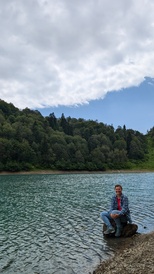 | Albina Mamedova (2022-23) Project Lead
|
External collaborators
Khatia Basilashvili | Project coordinator, Conservation and Habitat Restoration Researcher |
| Nino Panculaia | Local Facilitator, Eco-Village Founder & Conservation Advocate |
| Dachi Shoshitashvili | Ornithologist |
| Giorgi Lemonjava | Conservation Officer, Researcher |