
Current Students
The 2025-2026 cohort comprises 16 students from 15 countries.
Aditi Rajan, India

My journey into conservation began long before I knew the word. As a child exploring the Western Ghats on my parents’ backs, binoculars in hand, I learned to identify birds and listen to forests. Growing up where ideas, stories, and critical thinking were equally valued laid the foundation for what became both a career and a calling. In my most recent role at Wildlife Conservation Society–India, I shaped an initially undefined position into a cohesive function rooted in conservation science. Supporting programmes across diverse themes, we created tools that made complex ideas accessible, from visualising research and policy briefs to helping scientists share their work with clarity and guiding teams to view outreach as strategy, not afterthought. The team became a space where science, storytelling, and design met to translate the complexities of conservation into tools that spoke across backgrounds, roles, and regions. This work extended beyond India. As Regional Consultant for WCS’s Greater Mekong and Southeast Asia programmes, I helped strengthen content systems and capacity across seven countries, and occasionally collaborated with teams in Congo and Madagascar. I see my role as creating the conditions for ideas to take root, offering tools, frameworks, and creative catalysts that unlock knowledge already present in the landscapes and teams I work with. What continues to drive me is the question of how we, as conservationists, can stay open, to learning, questioning, and adapting, so our strategies evolve with the changing world and the messy, beautiful, deeply human work of conservation.
Alya Purbahapsari, Indonesia
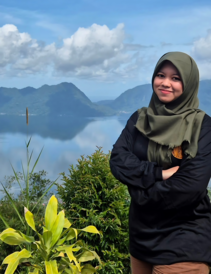
My passion for wildlife conservation comes from my childhood visits to Bogor Botanical Garden, where my father worked as a botanist. Following his path, I pursued bachelor’s and master’s at Institut Pertanian Bogor, focusing on biodiversity conservation. I started my career as a Biodiversity Survey Coordinator with Fauna & Flora International, conserving the Sumatran tiger in Kampar Peninsular. I then spent six years as a Data Analyst in Forest Law Enforcement, Ministry of Environment and Forestry. In 2022, I returned to conservation by joining SINTAS Indonesia Foundation, a local nonprofit conserving Indonesia’s threatened species. Our work integrates technology for species monitoring, including camera traps, Camerabase AI, GPS collars, thermal drones, and bioacoustics devices. In the last three years, I have been involved in multi-stakeholder partnerships for island-wide surveys of Sumatran tigers and Javan leopards and established six community-led “Patroli Anak Nagari” in human-tiger conflict hotspots in West Sumatra. As Co-Director, my role now focuses on strategic leadership. Through this MPhil program, I hope to strengthen my leadership and communication skills to sustain effective collaboration between NGOs, government, companies, academia and local communities. I am also eager to learn nature-based solutions that generate long-term co-benefits for both people and wildlife.
Andrea Rodríguez Zepeda, Mexico
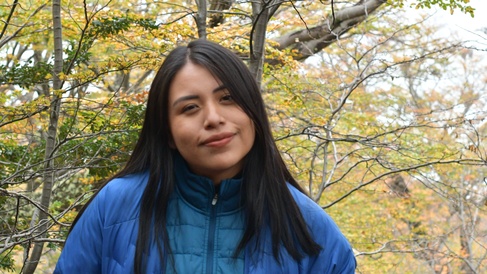
My passion for conservation was born in the high Mexican mountains where I first witnessed, through the melting of the country’s last glaciers, how climate change directly impacts ecosystems and the communities that depend on them. These early encounters inspired me to dedicate my career to developing solutions that bridge environmental protection with human well-being, I trained as a Sustainable Development Engineer and later completed a diploma at Yale University on Tropical Forest Landscape Management as a Three Cairns Fellow. Since then, I have grown as an environmental consultant in ecosystem-based adaptation, regenerative agriculture, and protected area management, working with the United Nations Development Programme, Ernst & Young, and firms such as Ithaca Environmental and Bios Sustainable Solutions. I founded Tierra Alta Fund, an NGO dedicated to financing conservation initiatives, where I oversee operational and financial management. I also co-founded the Mexican Committee of the Association of Polar Early Career Scientists, where I lead the Cryosphere and Adaptation Working Group and build networks for future polar scientists. My vision is to lead transformative conservation in Mountain Protected Areas and communal lands, co-creating sustainable approaches with communities and embedding climate adaptation as a transversal lens.
Berta Renom Parareda, Spain/Cabo Verde
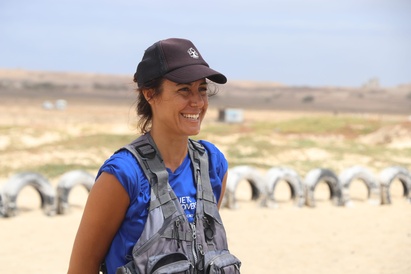
Born on the coast near Barcelona, I have been inspired by the sea since childhood, and even before I understood what conservation meant, I felt drawn to protecting nature. After graduating in Biology and completing a postgraduate degree in Marine Sciences at the University of Barcelona, I sought hands-on experience with wildlife. This journey led me to Sal Island, Cabo Verde, where I have spent the past 14 years. I began as a sea turtle field assistant yet quickly stepped into leadership. In 2015, I co-founded Project Biodiversity and served as executive director for seven years, gaining first-hand experience in building an environmental NGO from the ground up, managing projects, people, finances, and complex community relationships. Four years ago, seeking a closer connection to the ocean, I transitioned from the direction to develop and now lead the organisation’s Marine Monitoring Programme. My experience has shown me both the power and the limitations of local initiatives, often constrained by global policies and practices. Through the Masters in Conservation Leadership, I aim to strengthen my ability to bridge the gap between local and global conservation, advocating for coordinated international action that enables tangible local impact, particularly in marine conservation.
Felipe Andrade Davila, Ecuador
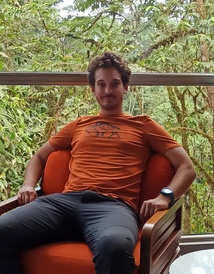
Born and raised in one of the most biodiverse countries in the world, I have always felt a deep connection with nature. An avid outdoors enthusiast who enjoys all kinds of activities from hiking, rock climbing, mountain bikes or photography as much as building LEGOs and playing videogames, all new experiences are welcome. As a biotechnology engineer, I began my career at Quito’s Botanical Garden, working on orchid rescue and ex-situ conservation, as well as urban forestry initiatives aimed at improving biodiversity and quality of life in the city. Driven to scale conservation impact beyond traditional approaches and with the vision of sustainable development, my work has expanded into the private sector, where I have explored innovative ways to link biodiversity and corporate sustainability with diverse business models. I contributed to the design and implementation of a technology-supported, decentralized, and scalable financial mechanism for conservation; co-designed the monitoring, reporting, and verification (MRV) system for forest conservation in the Tropical Andes; played a key role in the declaration and management of a new protected area in this region; and engaged as a strategic partner in the development of Ecuador’s high-integrity carbon market regulation. Through these experiences, I have learned that interdisciplinary collaboration can achieve remarkable results. I prefer to approach conservation with empathy and creativity, always seeking partnerships and alliances, and constantly exploring new opportunities to strengthen conservation efforts.
Han Chen, China

Growing up in Fujian, Southern China, I explored lush forests and observed diverse wildlife, yet also witnessed typhoons, landslides, and floods. These experiences revealed the fragile balance between people and ecosystems and sparked a curiosity and sense of responsibility that led me into conservation and climate work. My professional journey began at UNESCO Beijing Office, where I worked in the Natural Sciences Unit on biodiversity and youth engagement. I later joined the UNESCO World Water Assessment Programme in Italy, exploring the intersection of gender, water, and climate, and contributing to research on progress towards gender equality in the water domain. These experiences deepened my understanding of how environmental challenges are inseparable from social justice. Since 2021, I have served as Coordinator at Energy Foundation China, managing international climate grants and facilitating dialogues that inform policy and catalyze global climate action. My work has spanned intergovernmental organisations, research, and philanthropy, covering diverse topics from biodiversity and water governance to clean energy and just transition. Through the Masters in Conservation Leadership, I aim to strengthen my skills and networks to lead inclusive, ambitious conservation initiatives that safeguard ecosystems, empower communities, and deliver lasting impact for people and the planet.
Jéssica Julaia Bouché, Mozambique
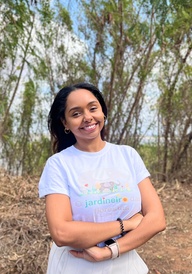
Growing up with a diverse cultural heritage and an enduring bond with the sea, I have always been curious and aware of the need to protect the environment and especially drawn to the ocean and the idea of protecting what sustains us. This early connection shaped my path towards undergraduate studies in Marine, Aquatic and Coastal Biology with the ambition of protecting marine ecosystems while supporting the livelihoods of Mozambique’s coastal communities through research and projects with tangible impact. My career journey has taken me from scientifically exploring marine environment to leading initiatives that bridge data, policy, community priorities and finance in conservation. Over the past eight years at Mozambique’s Conservation Trust Fund - BIOFUND, a leading institution in biodiversity conservation financing in the country - I established and led the Monitoring and Evaluation Department, building systems that strengthen institutional performance, guide strategic planning, and support evidence-based decision-making. I have pioneered innovative financing mechanisms, co-designed impactful environmental awareness programmes, and created leadership initiatives that inspire and equip the next generation of mozambican conservationists. Recognised as Mozambique’s Youth Ambassador for the Ocean (2016) and awarded for innovation in my field, I approach conservation with empathy, creativity and collaboration. Through the Masters in Conservation Leadership, I aim to deepen my capacity to integrate ecological monitoring, finance, and policy into solutions that deliver lasting benefits for both people and nature.
.
Juan Carlos Pacheco Aguirre, Chile

My passion is nature conservation and my purpose is to enhance the recognition and pride of society about protected areas. I love wildlife watching and I’m always thinking about how we all can collaborate and create a bigger impact for marine and terrestrial conservation. I’m a specialist in Protected Area management with focus on the social dimensions. I hold a bachelor's degree in Ecotourism Management (Chile) and a Masters degree in Protected Natural Areas (Spain). I had the honour to be the driving force of the Chilean Day of Protected Areas and the Day of Protected Areas in Latin America and the Caribbean. I am a Mentor for candidate Protected Areas in the IUCN Green List process in Chile and Costa Rica, and serve as an advisor for National Parks and Privately Protected Areas. In 2024, I was recognized with Chile’s 100 Young Leaders Award. I work as a researcher and professor at the Universidad de Concepción and Universidad Austral de Chile, and have visited more than 100 protected areas in Chile and around 15 across wider Latin America. Currently, I serve as Chile’s Focal Point for the IUCN World Commission on Protected Areas. My professional experience focuses on social engagement, governance, outreach, visitor management, ecotourism, environmental education, and universal access. I am also the Founder and Executive Director of Fundación Áreas Protegidas – Chile.
Lucia Vales, Peru/Ecuador

I was born and raised in the heart of Lima, the congested capital of Peru, yet my connection and vocation for nature have been present since childhood. I became a biologist at the Universidad San Francisco de Quito, Ecuador, my second homeland and the country where I reside. I have worked on several occasions as a consultant on circular economy and sustainability for industry and the public sector, as well as in conservation for international cooperation agencies such as UNIDO and GIZ. From 2017 to 2019, I was an Erasmus Mundus scholarship recipient and completed a Masters in Applied Ecology. Upon returning to Ecuador I worked for four years at the BirdLife International Secretariat, where I designed and coordinated a leadership program for mid-level managers within the partnership, and coordinated a multi-project initiative aimed at reducing bird trafficking in Guyana shield and the Caribbean. I seek to integrate education, citizen participation, Indigenous knowledge, and creative communication into biodiversity conservation strategies in megadiverse ecosystems. I try to spend as much time as possible in the field and have created an organic waste composting brand.
Maria Constantino, Mexico

Born and raised in Chiapas, Mexico, I developed a strong connection to nature early in life, which only deepened when I moved to Yucatán with its tropical forest, cenotes, mangroves and reefs. This led me to study Natural Resources Management and start working with The Nature Conservancy, where I’ve held roles ranging from administration and finance to partnership management and strategic planning. My work has focused on grass-roots and systemic levels: supporting communities to protect their territories and develop nature positive projects, whilst developing strategies that engage market actors, financial and government institutions to create enabling conditions for conservation at scale; all while facing unprecedented urban and agricultural growth. For the last two years, I coordinated the Yucatán Peninsula Alliance, a coalition of seven organizations teaming up to achieve conservation impact at scale. Outside of work, I run an apiculture family business and enjoy scuba diving in the Mexican Caribbean and cenotes of Yucatán, which continue to inspire and ground my commitment to conservation. Now, I am eager to be a part of the Cambridge community and broaden my perspective to lead efforts that contribute more effectively to the protection of this very special part of the planet I call home.
Natalia Rodriguez Forero, Colombia
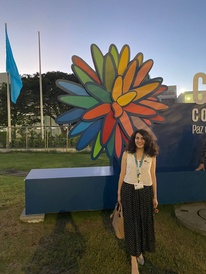
Born and raised in Bogota, Colombia— one of the world’s “megadiverse” countries— nature has always inspired me. I hold a degree in Government and International Relations with a focus on public management from Externado University. After working in various sectors, including tourism, I continued to feel drawn towards environmental issues. My journey into this field began after completing a Masters in Environmental Management from Los Andes University, which gave me the technical foundation to pursue roles aligned with my purpose. Since 2019, I have worked in the environmental team at the British Embassy in Bogotá, serving as Forest and Climate Support Officer; Forest, Land Use and Climate Programme Officer; and most recently, as Head of Environmental Policy, Biodiversity and Ocean. I have coordinated the UK-Colombia Partnership for Sustainable Growth, led the biodiversity and ocean team, and advised on climate and nature policy. My experience spans forest conservation, sustainable land use, environmental crime, and multilateral engagement such as UNFCCC and CBD. In 2024, I led the UK’s presence at CBD COP16 in Cali, delivering an impactful agenda of engagements and events — elevating marine ecosystems and illegal wildlife trade on the agenda. I believe we can build a future that is positive for nature and people. Through the Masters in Conservation Leadership, I aim to strengthen my leadership and knowledge in conservation to continue advocating for nature globally.
Sarah O'Connell, United States
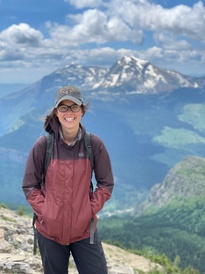
While working as a surrogate for a howler monkey whose mother was fatally electrocuted by exposed wires in Costa Rica, I learned the critical, yet largely unaddressed, role the private sector plays in conservation. The local utility company could have prevented her death with more consistent insulation practices. The nearby multinational food company could have minimized land conversion, reducing wildlife’s dependence on wires for mobility. As a nature and biodiversity consultant at KPMG, I have advised executive leadership and sustainability teams on adopting proactive nature-strategies, enhancing value chain traceability, and embedding biodiversity-focused decision-making. I am a Manager on KPMG’s Global Nature and Biodiversity team, with experience in applying biodiversity datasets and global methodologies, such as the Integrated Biodiversity Assessment Tool, Taskforce on Nature-related Financial Disclosures, and researching topics including natural capital accounting and biodiversity credits. My career has been diverse, with each experience focusing on a different aspect of conservation: research on American ownership of captive tigers, courses on human rights, fieldwork to rehabilitate Costa Rican species, and development of corporate biodiversity programs. At Cambridge, I am excited to explore intersections of conservation and collaborate with peers to bridge the gap between boardroom decisions and on-the-ground action.
Scott McSorley, New Zealand/UK
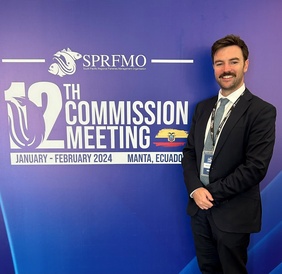
Born and raised on the beautiful islands of Aotearoa New Zealand, I connected with nature at a young age. Driven by this deep connection, I used my education to explore the political, economic, and philosophical roots of global environmental issues. This culminated in a Master of International Relations and a graduate diploma in mātauranga Māori (Indigenous knowledge). While studying, I held campaign leadership roles in youth NGOs at the heart of New Zealand’s environmental movement. I now work as a policy analyst for the New Zealand government, focusing on international oceans and fisheries issues. This role sees me represent New Zealand in fora such as the UN, OECD and Regional Fisheries Management Organisations (RFMOs), where I participate in discussions on the conservation and sustainable use of marine biodiversity. I know that positively shaping the environmental policy discussion is just as important to conservation efforts as fieldwork or fundraising. With this as my motivation, I’m excited to enter the Masters in Conservation Leadership to hone my advocacy and leadership skills, be inspired by my classmates, and rekindle my passion for our natural world.
Vilisa I. Morón Zambrano, Venezuela
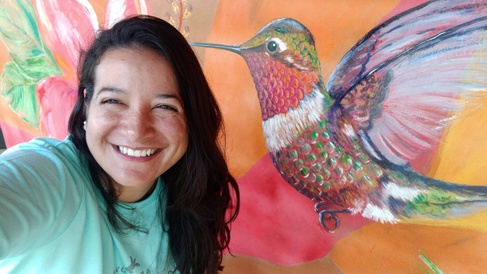
I am a Venezuelan conservation biologist with experience in ecological research focused on terrestrial ecosystems, particularly Amazonian and montane forests. My work integrates landscape ecology, biodiversity conservation, and the analysis of complex environmental challenges. I have contributed to the characterization of natural areas and the development of conservation strategies through academic research, consulting, and activism. Growing up in Venezuela—a country of extraordinary biodiversity—shaped my deep respect for nature. My Andean roots and family’s agricultural background instilled in me a strong connection to the land. Field trips during my biology studies allowed me to explore diverse ecosystems and understand the discipline and interdisciplinarity required in ecological research. I specialize in strengthening governance and territorial management, coordinating conservation initiatives, and building collaborative networks among young leaders across Latin America. As chair of the Venezuelan Ecological Society and focal point for the IUCN-WCPA Young Professionals Network, I have led multidisciplinary teams and organized major scientific events. I also founded youth-led movements and environmental education projects to promote climate action and community conservation. Now at Cambridge, I seek to deepen my understanding of the social dimensions of conservation. I believe that addressing environmental change requires engaging with social, economic, and political systems. My goal is to contribute to rebuilding Venezuela’s environmental institutions and become a bridge between academia, civil society, and the State—driving transformative change for biodiversity and people.
Wint Hte , Myanmar
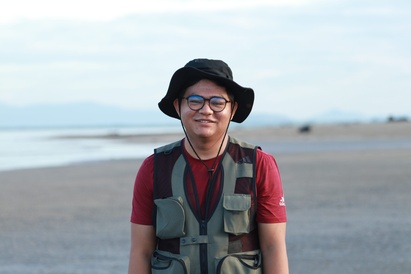
My passion for conservation is rooted in the complex interactions between ecological and social systems in coastal and marine environments, particularly inspired by my initiatives in marine mammal conservation and research in the Gulf of Mottama. As Coastal Resources Programme Officer at IUCN Myanmar, my work spans species monitoring, social-ecological research, community-based conservation initiatives, and the monitoring and evaluation of conservation effectiveness. I also have extensive experience in leading youth empowerment programmes aimed at strengthening youth participation in biodiversity conservation and the management of wetlands and coastal resources in Myanmar. I have strong commitment in co-creating ethical and inclusive conservation approaches that integrate local knowledge and ensure the meaningful participation of communities and marginalized groups in the conservation process. My long-term goal is to focus on community-based marine mammal conservation, especially where their survival intersects with small-scale fisheries. To support this vision, I aim to deepen my understanding and strengthen my leadership to advance locally grounded, innovative, collaborative, and adaptive solutions that balance the well-being of communities and the conservation of marine mammals.
Zhainagul Bekenova, Kyrgyzstan

I first entered the environmental sector during my work at the International University of Central Asia, where I led an Erasmus+ capacity-building project focused on integrating Green Economy principles into eight university curricula. That experience sparked a deep interest in sustainability and showed me how education can be a powerful entry point for systemic change. Later, joining Fauna & Flora allowed me to explore conservation in practice. As a Programme Officer, I coordinate efforts to combat illegal wildlife trade (IWT) in the region, developing partnerships with law enforcement agencies and government institutions. To date, I have trained over 300 officers across the country representatives from Custom and Border Services, Eco-police, helping to build long-term capacity to address IWT on a national and regional scale. I am passionate about connecting local action with global thinking. My leadership journey has included specialized programmes for women in conservation, international fellowships, and an active member of the Central Eurasia Leadership Alliance (CELA), a cross-regional network of changemakers from 15 countries. Through CELA, I’ve expanded my understanding of regional leadership and contributed to collaborative initiatives in Central Asia. Through the Masters in Conservation Leadership, I hope to deepen my strategic knowledge, strengthen my network, and return equipped to shape policy, education, and conservation in Central Asia.