
Buzzing Coexistence: Strengthening Strategies and Capacity in Mexico for Coexisting with Wildlife in a Changing Climate

Project overview
This project aims to support Calakmul beekeepers to adapt to climate change and reduce HWC by scaling mitigation tools, fostering community-led sustainability. Through strategic collaborations, it also seeks to strengthen Mexican institutional capacity by equipping key stakeholders, such as government agencies and local NGOs that deal with HWC, with training centered on holistic, equitable strategies for conflict prevention and coexistence.
- Adapt and reduce climate change–induced human-wildlife conflict (HWC)
- Foster long-term, community-led coexistence
- Co-design exit strategies to ensure long-term sustainability and local ownership
- Strengthen institutional capacity to manage human–wildlife conflict holistically
Project aims
The project aims to support Calakmul beekeepers in reducing HWC by expanding proven tools such as wildlife drinkers and rainwater harvesting systems that divert animals away from hives. It also aims to foster resilient, community-led coexistence by exploring, through workshops, how to gradually transfer project ownership to local actors, enabling self-management, equitable cost sharing, and independent responses to emerging conflicts. Finally, it aims to strengthen NGO and government capacity for HWC management by integrating human dimensions and long-term planning, to shift from siloed strategies toward holistic, coexistence-oriented approaches across Mexico.
Key activities
- Installation of wildlife drinkers and rainwater harvesting systems to reduce wildlife pressure on beehives and prevent HWC with beekeepers.
- Conduct participatory workshops to assess local perceptions, identify barriers and opportunities, and co-develop a roadmap and exit strategy for long-term sustainability and coexistence.
- Collaborate with the IUCN Human–Wildlife Conflict and Coexistence Specialist Group to deliver a training for decision-makers and local NGOS on holistic HWC management and coexistence approaches.
- Deploy camera traps and monitoring tools to evaluate the effectiveness of the implemented HWC mitigation measures
Expected conservation impact
Reduced conflict between beekeepers and wildlife, demonstrated through camera-trap monitoring and community feedback showing fewer wildlife visits to beehives once alternative water sources are available.
- Increased tolerance to HWC and toward wildlife interactions, with beekeepers reporting greater willingness to coexist.
- Greater peer-to-peer scaling of coexistence practices, as beekeepers share experiences with neighboring communities and promote conflict-prevention apicultural practices.
- A functioning, community-led strategy to address drought-driven HWC, enabling self-organization, local implementation in new communities, and reduced dependence on external support through a co-developed exit strategy.
- Local NGOs and stakeholders working in Calakmul adopt sustainable coexistence methodologies, consider using the exit framework to strengthen fair responsibility-sharing and long-term resilience.
- Government institutions integrate holistic practices aligned with the IUCN HWCC Guidelines, moving beyond short-term loss repair toward approaches integrating ecological and human dimensions.
Expected outputs
- Ten rainwater harvesting systems installed in beekeeping parcels across two Calakmul communities to supply water for beekeeping and wildlife drinkers.
- Twenty self-refillable wildlife drinkers installed and functioning, reducing wildlife visitation to hives.
- A methodology for designing exit strategies, including stakeholder and governance mapping to support long-term sustainability.
- A co-developed exit strategy roadmap with recommendations on financing mechanisms, governance improvements, and stakeholder roles.
- A stakeholder map identifying priority institutions, NGOs, and decision-makers requiring HWCC training.
- IUCN HWCC training translated and adapted to the Mexican context, including Spanish materials and pre- and post-evaluations.
- One national-level training in Mexico City for at least 30 participants from NGOs and government agencies.
- A policy-oriented workshop brief and tailored communication strategy to disseminate lessons learned and recommendations.
Project team
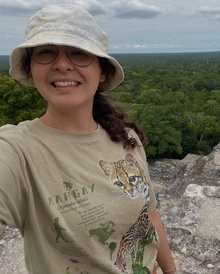 | Mariam Weston Flores (2021-22) IUCN HWCC SG Programme Officer/ OWG coordinator I am a Sustainable Development Engineer and an alumna of the MPhil in Conservation Leadership. I currently serve as Coordinator of the Ocelot Working Group, where I design and manage projects focused on mitigating threats to small felids, jaguars, and pumas across eight states in Mexico and in El Salvador. Many of these projects address human–felid conflict and promote coexistence between people and wildlife. In parallel, I work as a Programme Officer for the IUCN Human–Wildlife Conflict and Coexistence Specialist Group, leading the design and implementation of capacity-building trainings for diverse stakeholders. I have over nine years of experience working with NGOs and have been actively engaged in conservation work in Calakmul since 2019. My expertise centers on developing community-led, equitable, and sustainable coexistence solutions. |
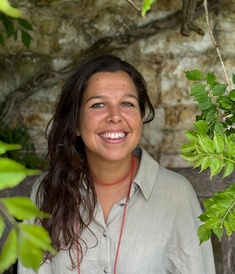 | Mariana Martinez del Rio Chair of the UCCLAN Council I am a passionate conservation professional with over nine years of experience in biodiversity conservation, nature economy, public policy, community-led conservation, and integrated landscape approaches. I have worked with diverse stakeholders, including Indigenous Peoples and local communities, governments, NGOs, UN agencies, and the private sector, across local, national, and international projects. I currently serve as President of the University of Cambridge Conservation Leadership Alumni Network and as a Programme Officer in the Nature Economy team at UNEP-WCMC. I began my career in Mexico working for 4.5 years on the GEF Endangered Species Project, supporting protected areas including Calakmul through sustainable livelihoods with honey producers and wildlife water stations to address drought impacts. I bring deep regional experience, strong networks within Mexican conservation, facilitation expertise, governance and leadership experience, and practical experience addressing human–wildlife conflict involving jaguars and Mexican wolves. |
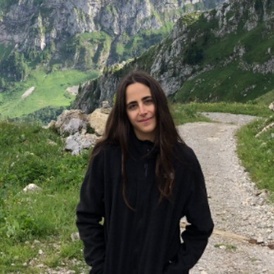 | Maria Ines Hernandez PhD Candidate in Geography, University of Cambridge I am a researcher from Mexico City with a BA in Political Science from Universidad Iberoamericana and an alumna of the MPhil in Conservation Leadership (2020/21). My PhD research examines how migrant communities from rural Mexico relate to more-than-human nature in New York City, grounded in feminist political ecology and participatory methodologies. My work explores affective and material relationships with nature, access to ecosystem services, environmental migration drivers, and the role of environmental memory in fostering mutual aid and solidarity. Previously, I worked for two and a half years at Unearthodox as Diversity, Inclusion, and Research Coordinator, leading participatory methodologies and facilitating inclusive dialogue across diverse stakeholders to reimagine conservation. Before the MPhil, I coordinated the Urban Forest Programme at Reforestamos México, collaborating with local governments on urban forest policy and community engagement. I bring expertise in participatory research, systems thinking, decolonial approaches, and inclusive co-production. |
External collaborators
| Carlos M. Delgado-Martínez | PhD candidate UNAM/Collaborator at OWG |