
Restoring 100 Hectares: Participatory Strategies for Managing Invasive Senna uniflora in Gujarat’s Grasslands

Project Overview
- 3 year community-led restoration of 100 hectares of semi-arid grasslands in Chotila, Surendranagar, Gujarat.
- Targets invasive Senna uniflora (plus Prosopis juliflora and Lantana camara where present) that is displacing native grasses and reducing fodder.
- Works across five villages (Reshamiya, Kalasar, Laksukia, Kabran, Rajpara) via revived Biodiversity Management Committees (BMCs) and a Forest Department–linked grass nursery.
Project Aims
- Restore 100 hectares of exotic plant invasion-affected grasslands to a biodiverse, productive savanna structure.
- Revive/strengthen five BMCs to govern commons through restoration action plans, budgets, and grazing by-laws.
- Establish a dedicated grass nursery to propagate native grasses, shrubs, and keystone trees for assisted regeneration.
- Create a replicable monitoring protocol and share evidence to support wider uptake and policy attention for grasslands.
Key Activities
- Baseline mapping & site assessments (vegetation cover, species diversity, biomass productivity, soil quality, seedbank checks; GIS/GCP-based demarcation).
- Community planning through BMCs; FPIC reaffirmation; employ and train youth/women for implementation and monitoring.
- Invasive removal: manual removal/cutting of Senna before seeding; CRS method for Lantana; controlled mechanised Prosopis removal; biomass utilisation to support maintenance funds.
- Assisted regeneration (seeding/planting natives) + rotational grazing calendars, exclusion zones, and by-laws.
Expected Conservation Impact
- Shift 100 hectares from invasive exotic plant infestations toward native plant recovery, higher forage biomass, and improved ecosystem resilience.
- Improved habitat quality for grassland-associated wildlife and reduced pressure that can drive crop-raiding and conflict dynamics.
- Stronger, statutory community governance of commons via functional BMCs and locally enforced grazing rules, reducing reinvasion risk.
- A tested, documented restoration + monitoring approach to enable replication and inform broader grassland management frameworks.
Expected Outputs
- 100 hectares restored by end of Year 3; 1 grass nursery established with Forest Department partnership.
- 5 strengthened BMCs (target 50% women members) producing: 5 restoration action plans, 5 grazing calendars, 5 by-law sets (Year 1).
- 5 youth trained (≥50% women) and ~200 employment days generated across 3 years.
- Monitoring protocol with GIS outputs (NDVI/EVI seasonal maps; 3-year vegetation records).
- 2 bilingual field guides, 1 policy brief, 1 peer-reviewed paper, and multi-level workshops/consultations
Project Team
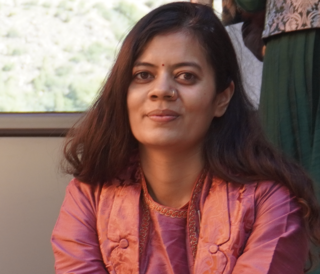 | Aditi Patil (2022–23) Co-founder and Director – Conservation indica, Gujarat, India Aditi Patil is a nature conservationist, writer, and Founding Director of Conservation indica, a young, women-led organisation working to make conservation research more accessible and grounded in lived realities. A Commonwealth Shared Scholar, she completed an MPhil in Conservation Leadership at the University of Cambridge (2022–23). With over a decade of experience in India, Aditi has worked on illegal wildlife trade with Wildlife Conservation Society–India and served as a Young Professional at the Ministry of Environment, Forest and Climate Change, alongside wider experience with organisations such as WWF-India. Her work sits at the intersection of biodiversity research, governance, and community stewardship, particularly in under-recognised landscapes like semi-arid grasslands. She is the author of Patriarchy and the Pangolin and has also contributed to conservation storytelling as a documentary scriptwriter. |
 | Sandeep Sharma (2022–23) Conservator of Forests, Kullu Circle, Himachal Pradesh Forest Department, India Sandeep Sharma is a forestry and conservation leader with ~23 years’ experience spanning forest policy, restoration finance, and public engagement. He earned an MPhil in Conservation Leadership from the University of Cambridge (2022–23) and trained at the Wildlife Institute of India (PG Diploma in Wildlife Management, 2008), alongside postgraduate and undergraduate degrees in forestry. He has previously served as Senior Assistant Inspector General of Forests at India’s Ministry of Environment, Forest and Climate Change, contributing to sustainable forest management and biodiversity policy, including compiling 500+ sector guidelines (2019) and strengthening transparency through improved online forest-clearance workflows. He currently serves as Conservator of Forests, Kullu Circle and Director of the Great Himalayan National Park. |
 | Albina Mamedova (2022-23) Project Lead, Kumisi Lake Restoration, Georgia Albina Mamedova is a conservation professional from Georgia (Sakartvelo) who combines transboundary environmental protection experience with community-driven approaches. Trained in ecology and natural resource management, and with a background in international relations, she brings a strong socio-ecological lens to complex conservation challenges. An alumna of the University of Cambridge MPhil in Conservation Leadership (2022–23), she focused on transboundary conservation and restoration in the Black Sea region and has experience navigating diverse regulatory and stakeholder contexts She currently leads the Kumisi Lake Restoration initiative in Georgia—laying the groundwork for a cost-effective, community-led wetland conservation model at a major bird hotspot. The project is building baseline ecological and hydrological evidence (including bird monitoring, drone mapping, and camera-trap surveys), piloting small-scale restoration such as an artificial island, and establishing a local conservation hub to support long-term stewardship. |
 | Mrunmayee Amarnath (2020-21) Mrunmayee isa 2020–21 alumna of the MPhil in Conservation Leadership and now serves as Technical Specialist – Enterprise at Fauna & Flora in Cambridge, UK. Drawing on extensive experience in India, she supports the design and delivery of market-based and financial mechanisms that address conservation challenges across Africa and Asia. Her commitment to biodiversity conservation began in India’s Western Ghats, where she worked with WildCAT-C, a local advocacy NGO in her hometown. She later held senior roles including Head of Finance and Administration at Wildlife Conservation Society–India and Executive Director of WildCANE in Chikkamagaluru. Her work spans semi-arid grassland conservation and Western Ghats priorities such as unregulated tourism, voluntary resettlement, human–elephant conflict, wildlife trade, legal barriers to sustainable development, and public awareness. She specialises in conservation enterprise, sustainable supply chains, and innovative finance, combining global perspective with deep local ecological and cultural knowledge. |