
The Masters in Conservation Leadership programme at the University of Cambridge offers students a unique opportunity to put their skills into practice through a Professional Placement.
Merry Gnecco Polonia, a marine conservationist from 2023-24 cohort, embraced this opportunity to explore community-led marine protection in Scotland. Her placement exemplified the programme's goals, allowing her to develop and demonstrate conservation leadership abilities, put classroom concepts into action, and contribute to meaningful, real-world conservation efforts.
Exploring Community-Led Marine Protection
During her placement, Merry immersed herself in Scotland's marine ecosystems, gaining firsthand experience of the beauty these communities are striving to protect. She engaged with individuals from projects in Scotland and around the world, drawing inspiration from their dedication to ocean conservation.
"It was inspiring and even touching to talk to individuals who dedicated their careers, and in some cases their lives, to protect the ocean," Merry reflected. "I gained deep insights from their stories and their perspectives, which significantly impacted my view of marine conservation."
Leadership Lessons and Personal Growth
Merry's experience reinforced the importance of persistence in conservation leadership. She observed that successful community groups "never gave up, even in the face of numerous barriers, scepticism from the government, and resistance from some community members. They achieved their goals through years of perseverance."
Facing her own leadership challenges, particularly in self-motivation and time management, Merry developed strategies to maintain productivity. She broke down tasks into smaller, achievable goals and practiced "body-doubling" - working alongside others for mutual support.
Expanding Horizons
The placement broadened Merry's perspective on marine ecosystems. "I didn't expect to enjoy and be so interested in non-tropical marine ecosystems!" she shared. "Habitats like kelp and seagrass are rich, colorful, diverse, and incredibly important."
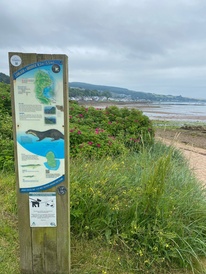
One of her most inspiring moments came from engaging with the Community of Arran Seabed Trust (COAST) on the Isle of Arran. Their journey from grassroots beginnings to establishing a no-take zone in Lamlash Bay deepened Merry's appreciation for community-driven conservation efforts.

Impact and Future Directions
Merry concluded her placement in August with a newfound love for temperate-cold marine ecosystems and a deeper understanding of conservation leadership. "Adaptation and resilience are now central to my conservation leadership vocabulary," she stated, "and I will actively foster these qualities in myself moving forward."
The impact of Merry's placement experience extended beyond personal growth. Her dedication and newly acquired skills opened up an exciting opportunity for her next professional step. Following her placement, Merry secured an internship with the prestigious Endangered Landscapes & Seascapes Programme, focusing on Seascape Project Development.
In this role, Merry is undertaking a literature review to compile learnings from marine restoration trials for foundation species such as kelp, seagrass, and oysters. This work will directly inform Stage 3 seascapes restoration trial design, with Merry producing case studies of key learnings for two to three foundation marine species.
This internship not only builds on Merry's placement experience but also allows her to contribute directly to cutting-edge marine conservation efforts. It demonstrates how the Professional Placement component of the Masters in Conservation Leadership programme serves as a springboard for students, connecting their academic knowledge with real-world conservation challenges and opportunities.