

The Masters in Conservation Leadership at Cambridge University believes in exposing our students to diverse approaches in environmental leadership. Each October, as part of this commitment, our new cohort visits Forest School For Life in Wymondham, an award-winning early years setting that has been an invaluable learning partner for our course over the past decade.
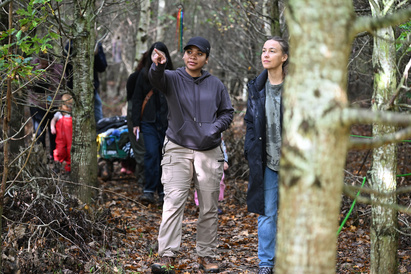
This distinctive educational visit offers our students a compelling example of how innovative leadership can transform environmental education and community engagement. Founded in 2011 by Victoria Furness, Forest School For Life reimagines early years education, moving beyond traditional classroom boundaries to blend Forest Schools Philosophy with their unique 'Bigger Than Us' curriculum. This innovative approach creates meaningful connections between young learners and their natural environment.
"I am very impressed by Victoria's passion for forest school," reflects Benazir, one of our current students. "She took a brave step to open this school, showing us what strong leadership in conservation looks like. It shows how believing in your ideas can create real change."
The visit provides our conservation leaders with insights into practical implementation of environmental education principles. Through direct observation and engagement, students witness how the setting's permaculture sites, organic farming areas, and forest spaces serve as dynamic learning environments. The school's approach demonstrates how educational leadership can foster environmental stewardship from an early age, with children actively participating in nurturing animals, discovering pond ecosystems, and understanding organic farming practices.
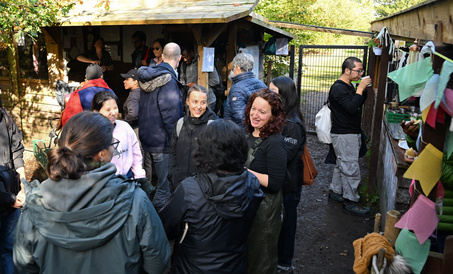
What makes this partnership particularly valuable for our masters is the opportunity to observe transformative leadership in action. The school's seasonal curriculum, which responds to natural rhythms and local environmental challenges, offers our students a practical model of how environmental education can be both structured and adaptive. This approach aligns closely with the complex challenges our conservation leaders will face in their future roles.
"For me, I learn a lot about resilience and humility from the founder's leadership," shares Eko, another student in our programme. "Watching how she has managed the school's evolution over time provides valuable insights into adaptive leadership. It's a powerful example of how conservation initiatives can grow and transform while maintaining their core mission."
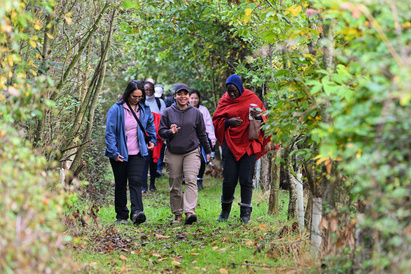
During focused discussions with Victoria, our students explore crucial aspects of environmental leadership, including:
- Building and sustaining community engagement in environmental initiatives
- Developing curriculum frameworks that respond to ecological contexts
- Creating inclusive environmental education programmes
- Managing the challenges of innovative educational approaches
- Implementing evidence-based practices in outdoor learning
The school's commitment to their "Flourish Pledge" and their work with local authorities in Norfolk demonstrates how environmental leadership can effectively engage with broader policy frameworks while maintaining grassroots community connections. This balance between institutional requirements and innovative practice provides valuable lessons for our conservation leaders.
This visit, occurring in the first weeks of our programme, sets a foundation for understanding how environmental leadership can take many forms. It challenges our students to think broadly about conservation leadership and its potential to shape future generations' relationship with nature. As our partnership with Forest School For Life continues to evolve, it remains a cornerstone of our programme's commitment to diverse and practical leadership learning.